Sample composite report — illustrative example
This report combines independent paternal Y-DNA lineage analysis and maternal mitochondrial DNA lineage analysis. Each section below — paternal and maternal — is itself a complete standalone report; the same content would be delivered if a client requested only one lineage. Both sections have a popular reading (Part 1) and a scientific basis with paper citations (Part 2).
Part 1 — Your paternal line: a story across 4,500 years of Iberian history
Your paternal line is a story written in the Y chromosome — a piece of DNA passed almost unchanged from father to son, generation after generation, for thousands of years. Tracing it backwards through time is like turning the pages of a very long family album, except the photographs are tiny single-letter spelling differences in DNA (called SNPs), and each page covers many centuries. This report walks you through what we know about your paternal line, beginning roughly 4,500 years ago on the Iberian Peninsula and extending through to the present day.
Bronze Age beginnings (about 4,500 years ago)
About 4,500 years ago — at the boundary between what archaeologists call the Copper Age and the Bronze Age — the man we now identify as the founder of your branch of the lineage R-Z195 lived somewhere in Western Europe, most likely in northeastern Iberia (modern-day Aragon, Catalonia, and Valencia). He was part of a wave of profound population change. Recent ancient-DNA studies have shown that around this time, populations carrying ancestry from the steppes of Eastern Europe — descendants of pastoralist communities who herded animals across vast open grasslands — spread into the Iberian Peninsula. Within just a few centuries, they had replaced almost 100% of the Y-chromosome lineages previously present in Iberia. The Y-line you carry today is part of this transformation.
These newcomers brought new technologies — Bell-Beaker decorated pottery, advanced metallurgy, horses — and a social organization in which the male line of inheritance mattered greatly. Archaeologists working at sites like El Argar in southeastern Iberia (active from around 2,200 BCE) have uncovered burials that preserve five-generation paternal pedigrees: fathers, sons, grandsons, great-grandsons, and great-great-grandsons resting close together in elite graves. Society was virilocal — meaning women moved to live with their husbands’ families — and the male lineage stayed put across the generations. The kind of founder effect produced by this structure is exactly what made your branch of R-Z195 expand so widely across Iberia over the following centuries.
The Late Bronze Age and Iron Age (~3,400 to ~2,300 years ago)
By around 1,400 BCE, your paternal line had narrowed down to a more recent founder — the ancestor of all carriers of R-DF81. His descendants spread across Iberia during the Late Bronze Age and into the Iron Age. By the time we reach 800 BCE, they were part of the Celtiberian world — a cultural complex famous for its iron weapons, hilltop settlements, and warriors who would later resist Roman armies. Greek and Roman writers would remember the Celtiberians as some of the fiercest fighters of the western Mediterranean.
By around 300 BCE, your line had narrowed further to the ancestor of R-Z2556. The world was about to change again. The Second Punic War (218–201 BCE) brought Roman armies to the Iberian Peninsula, and within two centuries — by 19 BCE — Rome had conquered the entire peninsula and reorganized it as the province of Hispania. Your paternal ancestors were now Roman subjects, paying taxes in Roman coin, walking on Roman roads, and (eventually, as Roman citizenship was extended across the empire) serving in Roman legions.
Late Roman and Visigothic Hispania (~1,650 years ago)
Around 350 CE — during the late Roman Empire — your line narrowed once more, to the founder of R-Y13238. This is the era when Christianity was becoming the dominant religion of the Mediterranean, when Roman armies on the frontier were starting to recruit Germanic allies (called federates), and when the structures of late antiquity were being slowly reshaped. By the early 5th century, Germanic peoples — Suebi, Vandals, and especially Visigoths — were settling within the Iberian Peninsula. The Visigothic kingdom that emerged would last for nearly three centuries (418–711 CE) and leave a lasting mark on the laws, languages, and politics of the peninsula.
Genetic studies of this period show something interesting: alongside the Visigothic settlement, there was also a slower, longer process of Mediterranean «homogenization» — gene flow from North Africa and the eastern Mediterranean that had begun already during the Roman Empire and continued through late antiquity. Your paternal ancestor in this era lived in a world that was Roman in its institutions, increasingly Christian in its religion, and demographically connected to the broader Mediterranean world.
The Reconquista era (~850 years ago)
Around 1170 CE — four and a half centuries into the Reconquista — your line narrowed to the founder of R-BY202926. This was a man living during the High Middle Ages in Iberia. The peninsula at this time was divided between Christian kingdoms in the north (Castile, León, Navarra, Aragon, Portugal) and Muslim al-Andalus in the south. Cities like Toledo had recently fallen to Christian armies; Córdoba and Seville would fall in the 13th century. Your ancestor in this period might have been a farmer, a craftsman, a soldier, a clergyman — someone whose specific story is lost but whose Y chromosome you carry today.
A striking finding from medieval-genome studies: despite the political upheavals of the Reconquista — the conquests, the population movements, the famous treaties of partition — the actual genetic landscape of the peninsula was much less disturbed than later events. Recent studies of medieval Iberian skeletons describe «the low impact of the Reconquista in the genetic landscape». The deeper changes had already happened. The Bronze Age Steppe-ancestry replacement four millennia earlier had been a far more transformative event than any medieval conquest.
The Colonial era and beyond (~500 to ~300 years ago)
When Columbus reached the Americas in 1492, the political map of Iberia changed quickly. Isabella and Ferdinand — the Catholic Monarchs — had completed the Reconquista with the fall of Granada the same year. Within a generation, Spanish ships were carrying men — soldiers, priests, settlers — across the Atlantic to the Caribbean, to Mexico, to Peru, to Colombia. Many of them carried your paternal line with them.
Genetic studies of present-day populations in Latin America show very strong Iberian Y-chromosome contributions in places like Antioquia (northwestern Colombia) and the Caribbean coast of Colombia. In some Antioquian populations, a Sephardic-associated component has even been documented, hinting at the contributions of converted Jewish families who fled the 1492 expulsion to the Spanish colonies. Your paternal line is part of this colonial diaspora story.
What we see in YFull’s research tree today
In YFull’s research tree, samples carrying R-Y13238 and its descendant R-BY202926 are documented from Bizkaia in the Basque Country, from Huesca in Aragon at the foot of the Pyrenees, and from the Iberian Population in Spain reference panel of the 1000 Genomes Project. The diaspora tracks include a sample from Lima, Peru, and another from Córdoba, Colombia. Each of these is a different branch of the same family tree on which you sit.
What this means
The story of your paternal Y chromosome is not a story about a specific named person — it is a story about a long line of fathers and sons stretching back through almost two hundred generations. Each generation made decisions, lived through wars and harvests and famines and feasts, and passed their Y chromosome — slightly modified by occasional new mutations — to their sons. The version you carry today is the result of all those decisions accumulated over four and a half millennia. The paper-grounded research summarized in Part 2 below provides the full scientific basis for everything described in this section.
Part 2 — Scientific basis (research-grade detail)
Overview
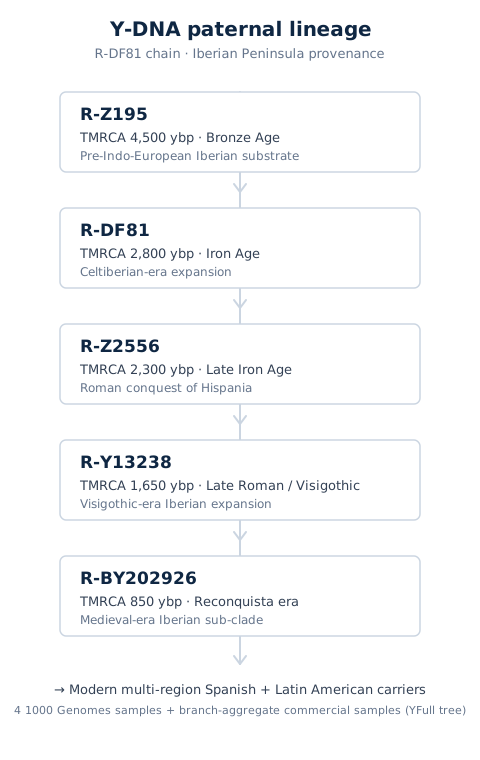
This report covers a paternal Y-DNA line traced through the R-DF81 → R-Z2556 → R-Y13238 → R-BY202926 chain of the Western European R1b haplogroup. The chain is documented in YFull’s research tree across Iberian populations and into colonial Latin American diaspora populations, with phylogenetic age estimates (TMRCA = Time to Most Recent Common Ancestor) spanning the Bronze Age origin of the parent R-Z195 lineage (~4,500 years before present) through the Late Roman / Visigothic horizon (~1,650 years before present) at R-Y13238 and the High Medieval Reconquista era (~850 years before present) at R-BY202926.
Paternal lineage (Y-DNA)
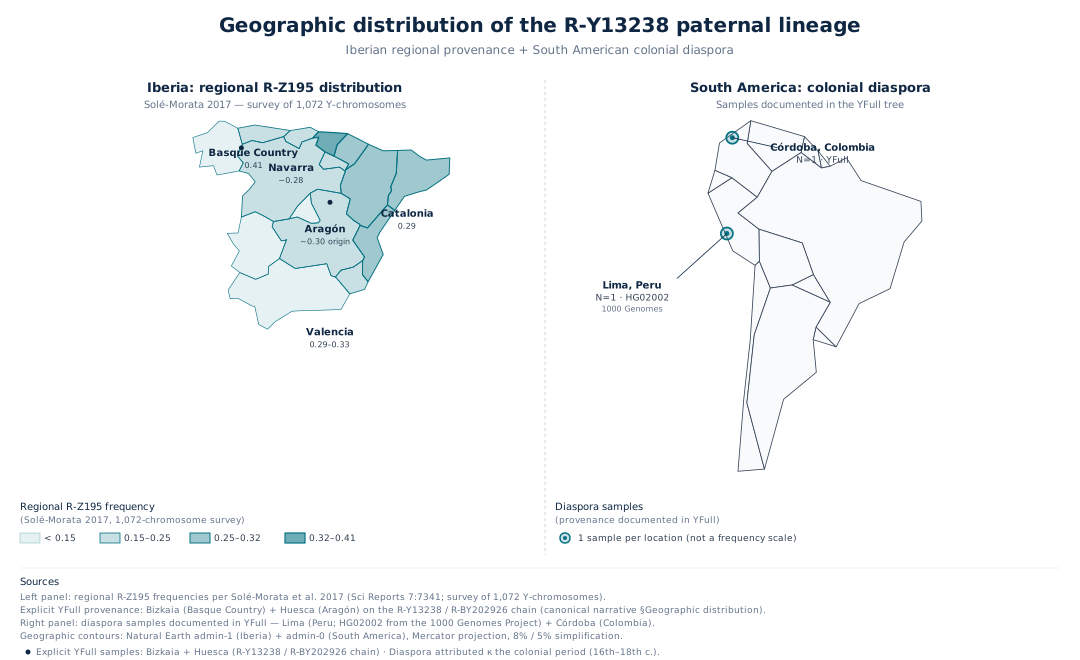
The paternal line begins with R-Z195 (formed roughly 4,500 years before present per YFull’s phylogenetic dating), one of the major sub-lineages of the Western European R1b-M269 → R1b-DF27 expansion. Solé-Morata et al. 2017 (Sci Reports 7:7341) reports R-Z195’s age at 4,570 ± 140 years ago — consistent with the YFull formed-age estimate — and identifies the Iberian Peninsula, particularly NE Iberia (Aragon, Catalonia, Valencia) and the Basque Country, as the most likely place of origin. Present-day Z195 frequencies in those regions reach 0.29–0.41, dropping rapidly to lower values toward Portugal and France; subhaplogroup geographic structure within R1b-DF27 is described as «reminiscent of the pre-Roman Celtic/Iberian division, or of the medieval Christian kingdoms».
The broader population-genomic context for this expansion is established by Olalde et al. 2019 (Science 363:1230–1234), whose ancient-DNA time transect of 271 ancient Iberians documents the replacement of approximately 40% of Iberia’s autosomal ancestry — and nearly 100% of its Y-chromosomes — by people carrying Steppe ancestry by approximately 2,000 BCE. The Y-chromosome turnover is corroborated by Villalba-Mouco et al. 2021 (Sci Advances 7:eabi7038), which documents the rise of the El Argar group around 2,200 cal BCE alongside «a complete turnover of Y-chromosome lineages along with the arrival of steppe-related ancestry» in southeastern Iberia. The El Argar Bronze Age society is further characterized by Villalba-Mouco et al. 2022 (Sci Reports 12:22415) as virilocally and patrilineally organized, with paternal pedigrees extending up to five generations — providing context for the founder-effect dynamics that produced the R-Z195 expansion. García-Fernández et al. 2022 (Sci Reports 12:20708) confirms «the rapid radiation of haplogroup R1b-DF27 in Spain» during the Bronze Age transition through Y-chromosome target-enrichment sequencing of 237 R1b-DF27 samples.
From R-Z195 descends R-DF81 (formed ~3,400 years before present, TMRCA ~2,800 years before present per YFull). Solé-Morata 2017 identifies an L176.2 sub-branch of Z195 with TMRCA 2,960 ± 230 years ago — a close match to YFull’s R-DF81 estimate, suggesting R-DF81 falls within or is closely related to the L176.2 sub-branch. This places R-DF81 at the Late Bronze Age → Iron Age boundary, contemporaneous with the Celtiberian cultural complex documented in archaeological records of Iberian populations of this era.
R-DF81 in turn descends to R-Z2556 (TMRCA ~2,300 years before present per YFull) — Late Iron Age, contemporaneous with the Roman conquest of Hispania (218 BCE–19 BCE) — and then to R-Y13238 (TMRCA ~1,650 years before present), placing the lineage in the Late Roman to early Visigothic horizon (~350 CE). The genetic signature of this period in Iberia is documented by Olalde 2019, which observes that «beginning at least in the Roman period, the ancestry of the peninsula was transformed by gene flow from North Africa and the eastern Mediterranean», and by Oteo-García et al. 2025 (Genome Biology 26:48) on medieval eastern Iberia, which describes «a pre-existing pan-Mediterranean homogenization phenomenon during the Roman Empire» preceding the Islamic period. Hernández et al. 2019 (Annals of Human Biology 46(1):63–76) reports younger time-frame estimates than previously published for R1b-M269 sub-lineages from a 414-male Andalusian sample, consistent with the Late Roman / Visigothic horizon for the R-Y13238 branch. The genetic footprint of the Visigothic period in Iberia is further documented by Olalde 2019: four 6th-century CE individuals from the Pla de l’Horta site (NE Iberia), interpreted as Visigoths, show ancestry shifted toward Northern and Central European populations relative to the local L’Esquerda population. The observed mitochondrial haplogroup C4a1a — also present in early-medieval Bavaria — reinforces the link with Central-European / Eastern-origin groups consistent with the Germanic migrations following the dissolution of the Western Roman Empire.
In YFull’s research tree, R-Y13238 is documented in approximately fifteen samples drawn from Iberian and Latin American populations. Four are publicly-documented 1000 Genomes Project samples: HG01182, HG01395, and HG01506 from the IBS (Iberian Population in Spain) reference panel, and HG02002 from Lima, Peru. The remaining samples are commercial submissions to YFull’s database, distributed across multiple Spanish autonomous regions including Bizkaia (Basque Country) and Huesca (Aragon, at the Pyrenees foothills), and including diaspora cases from Córdoba, Colombia.
Below R-Y13238, the R-BY202926 branch (TMRCA ~850 years before present per YFull) corresponds to the High Medieval Reconquista era. The genetic landscape of this period is illuminated by Rodríguez-Varela et al. 2024 (Sci Advances 10:eadp8625), the «Five Centuries of Consanguinity, Isolation, Health, and Conflict in Las Gobas» study of 33 individuals from a 7th–11th century necropolis in northern Spain, which documents «intricate family relationships and genetic continuity within a consanguineous population» and notes that significant North African or Middle Eastern ancestry increase since the Islamic conquest was not detected in this northern community, possibly because the population remained relatively isolated. Oteo-García 2025 further documents that «the Reconquista has a low impact in the genetic landscape» of eastern Iberia — suggesting that the demographic upheavals of the late medieval period were less transformative than the Bronze Age Steppe-ancestry replacement that originally established R-Z195 in the region.
The colonial-era diaspora component of the R-DF81 → R-BY202926 chain — represented in YFull’s tree by samples from Lima, Peru and Córdoba, Colombia — is contextualized by Carvajal-Carmona et al. 2000 (Am J Hum Genet 67:1287–1295) on Northwest Colombia, which documented Sephardic and broader Iberian Y-chromosome contribution to the founders of a Colombian Antioquia population, and by Nguidi et al. 2026 (American Journal of Biological Anthropology; PMC13062887) on the Caribbean Coast of Colombia, which reports European paternal lineages predominantly in inland Bolívar Department populations alongside Native American maternal lineages. The Solé-Morata 2017 framework is extended to Latin American Hispanic populations specifically by Villaescusa et al. 2019 (Forensic Sci Int Genet Suppl Ser 7(1):524–525) on R1b-DF27 in Hispanic admixed populations.
The age estimates on R-Z195, R-DF81, R-Z2556, R-Y13238, and R-BY202926 derive from YFull’s phylogenetic dating methodology (YTree v14.02.00, April 2026); Solé-Morata 2017’s age estimate for Z195 (4,570 ± 140 years ago) is in agreement with the YFull formed-age estimate (~4,500 years before present).
Temporal context
- Bronze Age (~4,500 years before present). R-Z195 origin; Solé-Morata 2017 dates Z195 at 4,570 ± 140 ya. Olalde 2019 documents the replacement of nearly 100% of Iberia’s Y-chromosomes by people carrying Steppe ancestry by approximately 2,000 BCE; Villalba-Mouco 2021 corroborates this as «a complete turnover of Y-chromosome lineages along with the arrival of steppe-related ancestry» tied to the rise of the El Argar group in southeastern Iberia (~2,200 cal BCE).
- Late Bronze Age → Iron Age (~3,400 to ~2,800 years before present). R-DF81 forms and reaches its TMRCA — likely within or closely related to the L176.2 sub-branch of Z195 (TMRCA 2,960 ± 230 ya per Solé-Morata 2017), at the Celtiberian cultural horizon.
- Iron Age and Roman conquest (~2,800 to ~2,300 years before present). R-Z2556 reaches its TMRCA at the threshold of the Roman conquest of Hispania. Hernández 2019 (414-male Andalusian sample) reports younger time-frame estimates for R1b-M269 sub-lineages, consistent with this horizon for downstream branches; Olalde 2019 documents Iron-Age spread of Steppe ancestry into both Indo-European and non-Indo-European-speaking Iberian regions. Olalde 2019 quantifies this pattern precisely: in 15 individuals from the Mediterranean coast speaking non-Indo-European Iberian languages, Steppe ancestry increases between 10–19% during the Iron Age. In 3 individuals from La Hoya (north-peninsular, Indo-European Celtiberian zone), the increase reaches 28–43%. Steppe diffusion, therefore, did not automatically accompany linguistic change — a fact particularly relevant for understanding the persistence of Basque in a region where Steppe gene flow is documented.
- Late Roman / Visigothic (~1,650 years before present). R-Y13238 TMRCA. Olalde 2019 documents that «beginning at least in the Roman period, the ancestry of the peninsula was transformed by gene flow from North Africa and the eastern Mediterranean»; Oteo-García 2025 frames this as «a pre-existing pan-Mediterranean homogenization phenomenon during the Roman Empire».
- Reconquista / High Medieval (~850 years before present). R-BY202926 TMRCA. Rodríguez-Varela 2024 documents 7th–11th century genetic continuity within a consanguineous Northern Iberian medieval community at Las Gobas, with no significant North African or Middle Eastern ancestry increase detected since the Islamic conquest in that population. Oteo-García 2025 reports that «the Reconquista has a low impact in the genetic landscape» of eastern Iberia. The TMRCA estimate for this period derives from YFull’s phylogenetic dating; the paper-grounded evidence anchors the demographic context, not a Reconquista-specific Y-event.
- Early Modern and colonial (~500–300 years before present). Downstream Y-subclades of R-BY202926 extend through the colonial expansion period. Carvajal-Carmona 2000 documents Iberian Y-chromosome contribution (including Sephardic-associated markers) to the founders of a Northwest Colombia population. Oteo-García 2025 documents that the post-medieval Expulsion of the Moriscos (1609 CE) had a substantial demographic impact on eastern Iberia through mass population displacement.
Geographic distribution
The paternal line is documented across multiple Spanish autonomous regions in YFull’s research tree, including Bizkaia (Basque Country) and Huesca (Aragon, at the Pyrenees foothills), with four publicly-documented 1000 Genomes samples drawn from the IBS Iberian reference panel and one from Lima, Peru. The lineage continues into colonial Latin America with samples documented from Córdoba, Colombia. The broader regional distribution of the parent R-Z195 lineage — per Solé-Morata et al. 2017’s 1072-chromosome survey — places highest frequencies (0.29–0.41) in the Basque Country and Eastern Iberia (Catalonia, Valencia), with Aragon showing the highest internal diversity, indicating the most likely place of origin. Subhaplogroup geographic structure within the broader R1b-DF27 cluster shows domains «reminiscent of the pre-Roman Celtic/Iberian division, or of the medieval Christian kingdoms» (Solé-Morata 2017). Latin American diaspora frequencies of R1b-DF27 in Hispanic admixed populations are documented by Villaescusa et al. 2019, and a forensic-relevant Y-chromosomal analysis of multi-ethnic Ecuador (Villaescusa et al. 2020) confirms the persistence of Iberian R1b sub-lineages in colonial-era Latin American populations.
References (Y-DNA)
- Carvajal-Carmona, L. G., Soto, I. D., Pineda, N., et al. (2000). Strong Amerind/White Sex Bias and a Possible Sephardic Contribution among the Founders of a Population in Northwest Colombia. American Journal of Human Genetics 67(5), 1287–1295. DOI: 10.1016/s0002-9297(07)62956-5.
- Fernández-López de Pablo, J., Gutiérrez-Roig, M., Gómez-Puche, M., et al. (2019). Palaeodemographic modelling supports a population bottleneck during the Pleistocene–Holocene transition in Iberia. Nature Communications 10, 1872. DOI: 10.1038/s41467-019-09833-3.
- García-Fernández, C., Lizano, E., Telford, M., et al. (2022). Y-chromosome target enrichment reveals rapid expansion of haplogroup R1b-DF27 in Iberia during the Bronze Age transition. Scientific Reports 12, 20708. DOI: 10.1038/s41598-022-25200-7.
- Hernández, C. L., Pita, G., Cavadas, B., et al. (2019). Paternal lineages in southern Iberia provide time frames for gene flow from mainland Europe and the Mediterranean world. Annals of Human Biology 46(1), 63–76. DOI: 10.1080/03014460.2019.1587507.
- Nguidi, M., Amory, C., Xavier, C., et al. (2026). Contrasting Maternal, Paternal, and Biparental Ancestry of Populations From the Caribbean Coast of Colombia. American Journal of Biological Anthropology. DOI: 10.1002/ajpa.70242. PMC13062887.
- Olalde, I., Mallick, S., Patterson, N., et al. (2019). The genomic history of the Iberian Peninsula over the past 8000 years. Science 363(6432), 1230–1234. DOI: 10.1126/science.aav4040.
- Oteo-García, G., Cabrera-Pérez, F., García-Pérez, R., et al. (2025). Medieval genomes from eastern Iberia illuminate the role of Morisco mass deportations in dismantling a long-standing genetic bridge with North Africa. Genome Biology 26, 48. DOI: 10.1186/s13059-025-03570-1.
- Solé-Morata, N., Villaescusa, P., García-Fernández, C., et al. (2017). Analysis of the R1b-DF27 haplogroup shows that a large fraction of Iberian Y-chromosome lineages originated recently in situ. Scientific Reports 7, 7341. DOI: 10.1038/s41598-017-07710-x.
- Rodríguez-Varela, R., Ammerpohl, O., Ruiz, J., et al. (2024). Five centuries of consanguinity, isolation, health, and conflict in Las Gobas: A Northern Medieval Iberian necropolis. Science Advances 10, eadp8625. DOI: 10.1126/sciadv.adp8625.
- Villaescusa, P., Blázquez, P., Martínez-Jarreta, B., Jiménez, S., Álvarez-Gila, O., and Pancorbo, M. M. de (2019). The impact of haplogroup R1b-DF27 in Hispanic admixed populations from Latin America. Forensic Science International: Genetics Supplement Series 7(1), 524–525. DOI: 10.1016/j.fsigss.2019.10.062.
- Villaescusa, P., Seidel, M., Nothnagel, M., et al. (2020). A Y-chromosomal survey of Ecuador’s multi-ethnic population reveals new insights into the tri-partite population structure and supports an early Holocene age of the rare Native American founder lineage C3-MPB373. Forensic Science International: Genetics 46, 102427. DOI: 10.1016/j.fsigen.2020.102427.
- Villalba-Mouco, V., Oliart, C., Rihuete-Herrada, C., et al. (2021). Genomic transformation and social organization during the Copper Age–Bronze Age transition in southern Iberia. Science Advances 7, eabi7038. DOI: 10.1126/sciadv.abi7038.
- Villalba-Mouco, V., Oliart, C., Rihuete-Herrada, C., et al. (2022). Kinship practices in the early state El Argar society from Bronze Age Iberia. Scientific Reports 12, 22415. DOI: 10.1038/s41598-022-25975-9.
- YFull Y-tree references: R-Z195, R-DF81, R-Z2556, R-Y13238, R-BY202926.
- 1000 Genomes Project samples cited at the R-Y13238 lineage: HG01182, HG01395, HG01506 (IBS Iberian reference panel), HG02002 (Peru, Lima).
- Phylogenetic age estimates (TMRCA, formed-age) per YFull’s YTree v14.02.00 dating methodology as of April 2026.
Part 1 — Your maternal line: a story across 8,800 years of Iberian history
Your maternal line is a story written in mitochondrial DNA — a small, separate piece of DNA found inside each of your cells. Mitochondrial DNA is inherited only from your mother (your father did not pass any to you), and it is passed almost unchanged from mother to daughter (and son) across hundreds of generations. Tracing it backwards is like reading a chronicle of women: mothers, grandmothers, great-grandmothers, going back through the centuries. This report tells you what we know about your maternal line, beginning at the end of the last Ice Age and extending through almost 9,000 years of Iberian history.
The Ice Age ancestors (~15,000 to ~12,000 years ago)
Your maternal line traces back to a maternal lineage called haplogroup H — one of the most common European mitochondrial lineages today. About 15,000 years ago, as the last Ice Age was ending, the ancestors of haplogroup H were sheltering in what is called the Franco-Cantabrian refuge — the region that spans the western Pyrenees, the Basque Country in northern Spain, and southern France. Most of Europe at this time was either covered in ice sheets or so cold that few people could live there; Iberia and southern France were among the few habitable zones. As the climate warmed, populations expanded out of this refuge and repopulated central and northern Europe. Your maternal line is part of this story.
The H3 sub-lineage — the branch of haplogroup H that you belong to — has its highest frequencies specifically centered in Iberia and surrounding areas, with frequencies declining as you move toward the northeast and southeast. This pattern, identified in a foundational 2004 study by Achilli and colleagues, is one of the clearest genetic signatures of the post-Ice-Age repopulation of Europe from the southwestern refuge. When researchers study haplogroup H today, the maternal lineages with the deepest Iberian roots are exactly the ones most likely to be on a branch like H3.
The Neolithic farming arrival (~8,800 years ago)
About 8,800 years ago, the H3 sub-lineage diversified further into the H3c branch — your branch’s parent lineage. This was around the time when Neolithic agriculture — wheat, barley, sheep, goats, cattle, pottery — was arriving in Iberia from the eastern Mediterranean. Hunter-gatherer populations and incoming farmers would mix gradually over the next several thousand years, but on the maternal side, the Iberian populations preserved a remarkable amount of partial pre-Neolithic continuity.
By around 4,400 years ago, your line had diversified into the H3c2 branch. By around 1,650 years ago, the H3c2a sub-branch had appeared — and this is where your line’s story becomes especially specific.
The Basque heartland (~4,000 years ago and onward)
H3c2a — the maternal lineage you carry — has been identified in published research as one of just six maternal haplogroups that are autochthonous to the Franco-Cantabrian region — meaning, the Basque Country and adjacent areas of northern Spain and southern France. The 2012 study by Behar and colleagues, called «The Basque Paradigm», documented this pattern in 420 mitochondrial genomes; the others in the named-six are H1j1, H1t1, H2a5a1, H1av1, and H1e1a1. These haplogroups — including yours — are the genetic signatures of populations that have lived continuously in the Basque region for thousands of years, since long before the arrival of Indo-European-speaking peoples in Western Europe.
The Behar study calculated that the Basque-autochthonous lineages — including H3c2a — expanded around 4,000 years ago, and that they had separated from the broader European maternal gene pool around 8,000 years ago, at a time predating the Indo-European arrival. In simpler terms: your maternal line was already in the Basque Country before the Indo-European languages reached Western Europe. The Basques themselves are also linguistically distinctive — Basque is a non-Indo-European language, often described as a linguistic isolate (meaning a language with no known related languages) — and the mitochondrial evidence suggests a deep continuity between today’s Basque population and the pre-Indo-European inhabitants of the Franco-Cantabrian region.
The Roman period and Visigothic Hispania (~1,650 years ago)
The H3c2a sub-branch reached its most recent common ancestor around 350 CE, in the late Roman Empire. By this time, your maternal ancestors had been living in the Basque heartland for thousands of years; when Roman armies and administrators arrived in the 1st century BCE, in genetic terms they did not displace the majority of the autochthonous populations (although localized episodes of violence and enslavement did occur, e.g., the Turduli), but rather predominantly integrated the existing populations under Roman institutions. Hispano-Roman genetic continuity persisted even through changes of political control (Olalde 2019). Over the next four centuries of Roman rule, and the three centuries of Visigothic kingdom that followed, the Basque-autochthonous maternal lineages — including H3c2a — were continuously transmitted from mother to daughter without interruption.
A 2024 study of a 7th–11th century necropolis at Las Gobas in northern Spain — covering 33 individuals from this exact era — found exactly what we would expect: «intricate family relationships and genetic continuity within a consanguineous population», and «no significant North African or Middle Eastern ancestries» — even after the Islamic conquest of southern Iberia in 711 CE. The Northern Iberian community at Las Gobas remained relatively isolated, much like the Basque populations more broadly. Your maternal line continued through this kind of community.
The Reconquista era (~850 years ago)
Around 1170 CE — during the High Middle Ages and the Reconquista — your line narrowed once more, to the founder of H3c2a1. This was a woman living somewhere in or near the Basque heartland, in the period when Christian kingdoms were expanding southward and the political map of Iberia was being redrawn. Cities like Toledo had recently fallen to Christian armies; the great medieval translator-school of Toledo was producing scholars who would carry Arab-translated knowledge of Greek philosophy back into Latin Christendom. Your maternal grandmother in this era — about thirty-four generations removed — was part of this world.
Recent medieval-genome studies of eastern Iberia describe «the low impact of the Reconquista in the genetic landscape» — meaning, despite the political upheavals, the actual genetic continuity of the populations was strong. The Basque population specifically continued to preserve its autochthonous maternal lineages, including H3c2a1.
The Early Modern era and beyond (~500 to ~300 years ago and after)
A parallel branch of H3c2a — H3c2a2, which split from H3c2a around 300 years ago — extends into the Early Modern period. Two H3c2a samples are also documented in present-day United States populations, in a 2020 NIST forensic-genetics dataset called «Platinum-Quality Mitogenome Haplotypes from United States Populations» — reflecting historical Iberian-American diaspora carriers of the lineage. Over the past few centuries, your maternal line has traveled from the Basque heartland into the broader Atlantic world.
What this means
The story of your maternal mitochondrial DNA is a story about a long line of women — mothers, daughters, mothers, daughters — stretching back through hundreds of generations to the post-Ice-Age refuge of southwestern Europe. Your line is one of just six maternal haplogroups that are specifically autochthonous to the Basque region, with partial genetic continuity documented from pre-Neolithic times through the medieval period and into today. The Basques have been recognized for centuries as linguistically and culturally distinctive in Europe; the genetic evidence — including the lineage you carry — supports the long continuity of this distinctiveness. The paper-grounded research summarized in Part 2 below provides the full scientific basis for everything described in this section.
Part 2 — Scientific basis (research-grade detail)
Overview
This report covers a maternal mtDNA line traced through the H3c2 → H3c2a → H3c2a1 chain of haplogroup H. The chain is documented in YFull’s research tree across Iberian populations — concentrated heavily in the Franco-Cantabrian / Basque region — with phylogenetic age estimates spanning the deep H3 origin (~11,000 years before present, per Achilli 2004) at the Late Pleistocene-to-Holocene transition through H3c2a (~1,650 years before present) at the Late Roman / Visigothic horizon and H3c2a1 (~850 years before present) at the High Medieval Reconquista era.
Maternal lineage (mtDNA)
The maternal line traces through haplogroup H, the most frequent European mitochondrial haplogroup. The H3 subclade was identified by Achilli et al. 2004 (The molecular dissection of mtDNA haplogroup H, Am J Hum Genet 75(5):910–918) as showing frequency peaks specifically centered in Iberia and surrounding areas, declining toward the northeast and southeast — a distribution attributed to post-glacial repopulation of Europe from the Franco-Cantabrian glacial refuge, the source of late-glacial hunter-gatherer expansions from approximately 15,000 years ago. H3’s coalescence age in that study is estimated at ~11,000 years before present.
Within H3, the chain descends through H3c (TMRCA ~6,800 years before present) and H3c2 (TMRCA ~4,400 years before present) into H3c2a (TMRCA ~1,650 years before present) and H3c2a1 (TMRCA ~850 years before present). H3c2a is one of six maternal haplogroups identified by Behar et al. 2012 (The Basque Paradigm, Am J Hum Genet 90(3):486–493) as autochthonous to the Franco-Cantabrian region — meaning it appears to have arisen and persisted primarily within Basque-speaking populations and adjacent areas of northern Spain and southern France, alongside H1j1, H1t1, H2a5a1, H1av1, and H1e1a1. Behar’s 420-genome dataset places the expansion of these autochthonous haplogroups at approximately 4,000 years before present and their separation from the broader European maternal gene pool at approximately 8,000 years before present — antedating the Indo-European arrival in the region. The presence of H3c2a in modern autochthonous Basques is independently confirmed and extended by the 178-genome forensic-quality mitogenome dataset of García et al. 2020 (Forensically relevant phylogeographic evaluation of mitogenome variation in the Basque Country, Forensic Sci Int Genet 46:102260). The Franco-Cantabrian Pre-Neolithic substrate framing is further corroborated by Cardoso et al. 2013 (PLOS One 8:e67835), which identified three additional haplogroups — U5b1f, J1c5c1, and V22 — as autochthonous to the Franco-Cantabrian Basque region. Together with the six H haplogroups of Behar 2012 (H1j1, H1t1, H2a5a1, H1av1, H3c2a, H1e1a1), they form a pre-Neolithic substrate accounting for at least 35% of the area’s current mitochondrial variation — confirming the partial continuity documented by Behar 2012 through an expanded dataset (548 individuals + 76 sequenced mitogenomes).
H3c2a samples in YFull’s research tree concentrate in the Franco-Cantabrian core: Navarra, Gipuzkoa, Bizkaia, Álava, and La Rioja on the Spanish side, and the Pyrénées-Atlantiques on the French side, with the Basque-language affiliation explicitly recorded for most samples. A small number of H3c2 samples appear outside this core in Barcelona, Salamanca, and Granada — recorded in the comparative reference dataset of Silva et al. 2021 (Biomolecular insights into… eleventh-century Al-Andalus, Sci Rep 11:18121), indicating modest diffusion of the lineage into broader Iberia. The H3c2a1 sub-branch (TMRCA ~850 years before present per YFull’s phylogenetic estimate) emerged within H3c2a during the High Medieval period; the parallel sub-branch H3c2a2 (TMRCA ~300 years before present) extends through the Early Modern era. Two additional H3c2a samples are documented in United States populations via the Taylor et al. Platinum-Quality Mitogenome Haplotypes from United States Populations dataset (NIST forensic-grade mitogenome reference), reflecting historical Iberian-American diaspora carriers of the lineage.

Temporal context
- Late glacial and Mesolithic (~15,000 to ~12,200 years before present). The Franco-Cantabrian refuge sourced post-glacial expansions repopulating Central and Northern Europe (Achilli et al. 2004); the H3 maternal root falls within this window.
- Mesolithic to Neolithic (~11,000 to ~8,800 years before present). H3 was formed around ~11,000 years before present in the Franco-Cantabrian refuge and expanded across Iberia and adjacent areas; H3c marks the Neolithic diversification around ~8,800 years before present.
- Bronze Age (~4,500 to ~4,000 years before present). H3c2 TMRCA falls within the Bronze Age window. Behar et al. 2012 dates the expansion of the Franco-Cantabrian autochthonous H haplogroups, including H3c2a, to approximately 4,000 years before present.
- Late Roman / Visigothic (~1,650 years before present). H3c2a TMRCA. The H3c2a sub-branch is anchored on the Late Roman / Visigothic boundary, where the Behar 2012 Franco-Cantabrian autochthonous classification continues into the era of Roman provincial Hispania.
- Reconquista / High Medieval (~850 years before present). H3c2a1 TMRCA. The H3c2a1 sub-branch emerged within H3c2a during the High Medieval period; the TMRCA estimate derives from YFull’s phylogenetic dating.
- Early Modern (~500–300 years before present) and onward. H3c2a2 (TMRCA ~300 years before present) extends through the Early Modern era. Two H3c2a samples in YFull’s tree from US populations (Taylor et al., NIST Platinum-Quality Mitogenome Haplotypes dataset) reflect historical Iberian-American diaspora carriers.
Geographic distribution
The maternal line shows a heavily Franco-Cantabrian / Basque-autochthonous geographic profile. H3c2a concentrates in Navarra, Gipuzkoa, Bizkaia, Álava, and La Rioja on the Spanish side, and the Pyrénées-Atlantiques on the French side, with the Basque-language affiliation explicitly recorded for most samples (Behar et al. 2012; García et al. 2020). Outside this core, a small number of H3c2 samples appear in broader Iberia (Barcelona, Salamanca, Granada — Silva et al. 2021 comparative reference panel). Two additional H3c2a samples are documented in United States populations via the Taylor et al. NIST Platinum-Quality Mitogenome Haplotypes dataset, reflecting historical Iberian-American diaspora carriers of the lineage. This profile — heavily Basque-autochthonous core with modest broader-Iberia diffusion and limited US-diaspora documentation — is consistent with documented patterns of Basque genetic continuity from pre-Neolithic times to the modern era (Behar 2012; Cardoso 2013; García 2020).
References (mtDNA)
- Achilli, A., Rengo, C., Magri, C., et al. (2004). The molecular dissection of mtDNA haplogroup H confirms that the Franco-Cantabrian glacial refuge was a major source for the European gene pool. American Journal of Human Genetics 75(5), 910–918. PMID: 15382008.
- Behar, D. M., Harmant, C., Manry, J., et al. (2012). The Basque Paradigm: Genetic Evidence of a Maternal Continuity in the Franco-Cantabrian Region since Pre-Neolithic Times. American Journal of Human Genetics 90(3), 486–493. DOI: 10.1016/j.ajhg.2012.01.002. (See samples in YFull paper 125.)
- Cardoso, S., Valverde, L., Alfonso-Sánchez, M. A., et al. (2013). The Expanded mtDNA Phylogeny of the Franco-Cantabrian Region Upholds the Pre-Neolithic Genetic Substrate of Basques. PLoS ONE 8(7), e67835.
- García, O., Alonso, S., Huber, N., Bodner, M., Parson, W. (2020). Forensically relevant phylogeographic evaluation of mitogenome variation in the Basque Country. Forensic Science International: Genetics 46, 102260. DOI: 10.1016/j.fsigen.2020.102260.
- Silva, M., Oteo-García, G., Martiniano, R., et al. (2021). Biomolecular insights into North African-related ancestry, mobility and diet in eleventh-century Al-Andalus. Scientific Reports 11, 18121. DOI: 10.1038/s41598-021-95996-3. (Cited here for the comparative reference dataset; the paper’s primary subject is unrelated to the H3c2 lineage. See samples in YFull paper 548.)
- Taylor, C. R., Kiesler, K. M., Sturk-Andreaggi, K., Ring, J. D., Parson, W., Schanfield, M., et al. (2020). Platinum-Quality Mitogenome Haplotypes from United States Populations. Genes 11(11), 1290. DOI: 10.3390/genes11111290. (NIST forensic-grade mitogenome reference dataset; see samples in YFull paper 623; 1327 mitogenomes from US populations.)
- YFull mtDNA tree references: H3, H3c, H3c2, H3c2a, H3c2a1, H3c2a2.
- Phylogenetic age estimates (TMRCA, formed-age) per YFull’s MTree dating methodology as of April 2026.
Y-DNA and mtDNA parallel timelines
The visualization below shows the paternal Y-DNA timeline (top track) and the maternal mtDNA timeline (bottom track) on a shared logarithmic time axis. Each track represents the independent chronology of its lineage; readers may compare TMRCA dates and regional origins across the two tracks to assess whether shared demographic context applies in their case.
